SQL Lab
SQL Lab is a powerful feature in ExamIQ that provides an interactive environment for running SQL queries against connected databases. Users can write, execute, and explore SQL queries, visualize the results, and save them for later use.
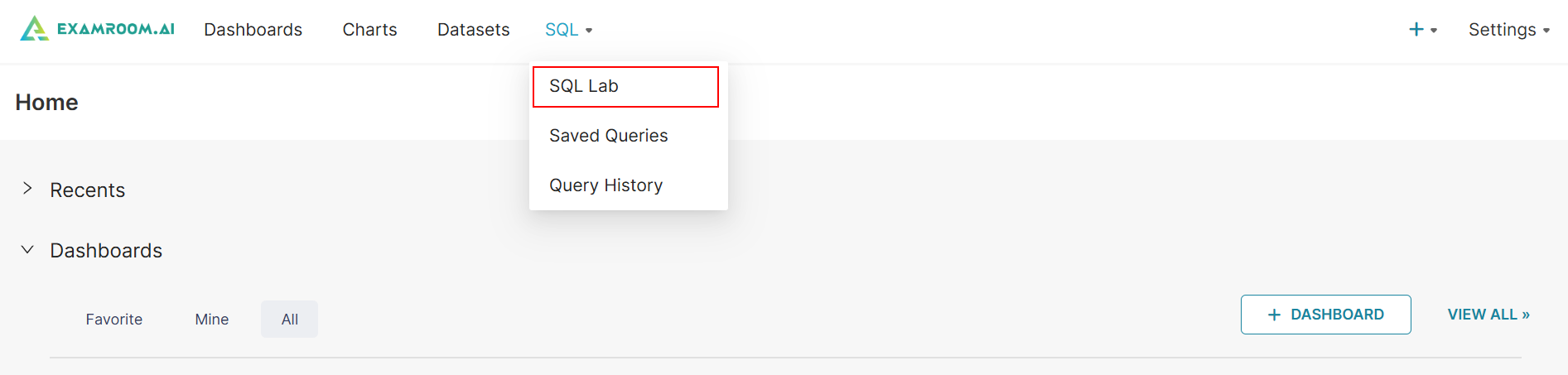
- Click SQL in the toolbar and select SQL Lab from the dropdown menu.
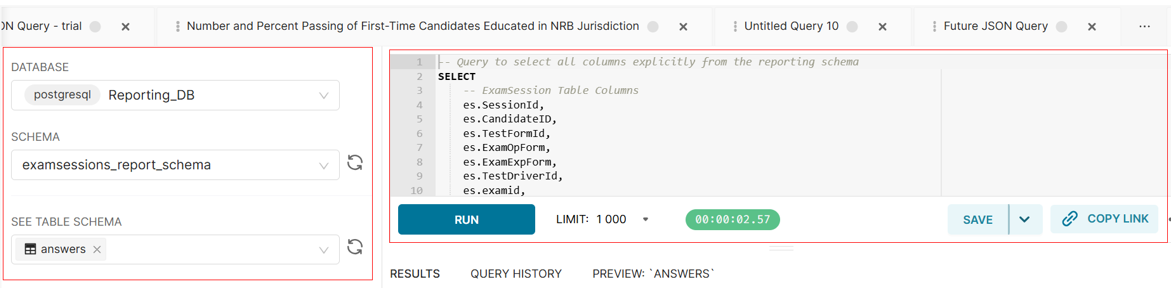
- Select the DATABASE, SCHEMA, and SEE TABLE SCHEMA from the dropdown menu.
Note: Based on the database, you can view the schema and examine the table structure, which is already integrated with the database. - Add queries in the query section located on the right side of the screen as needed.
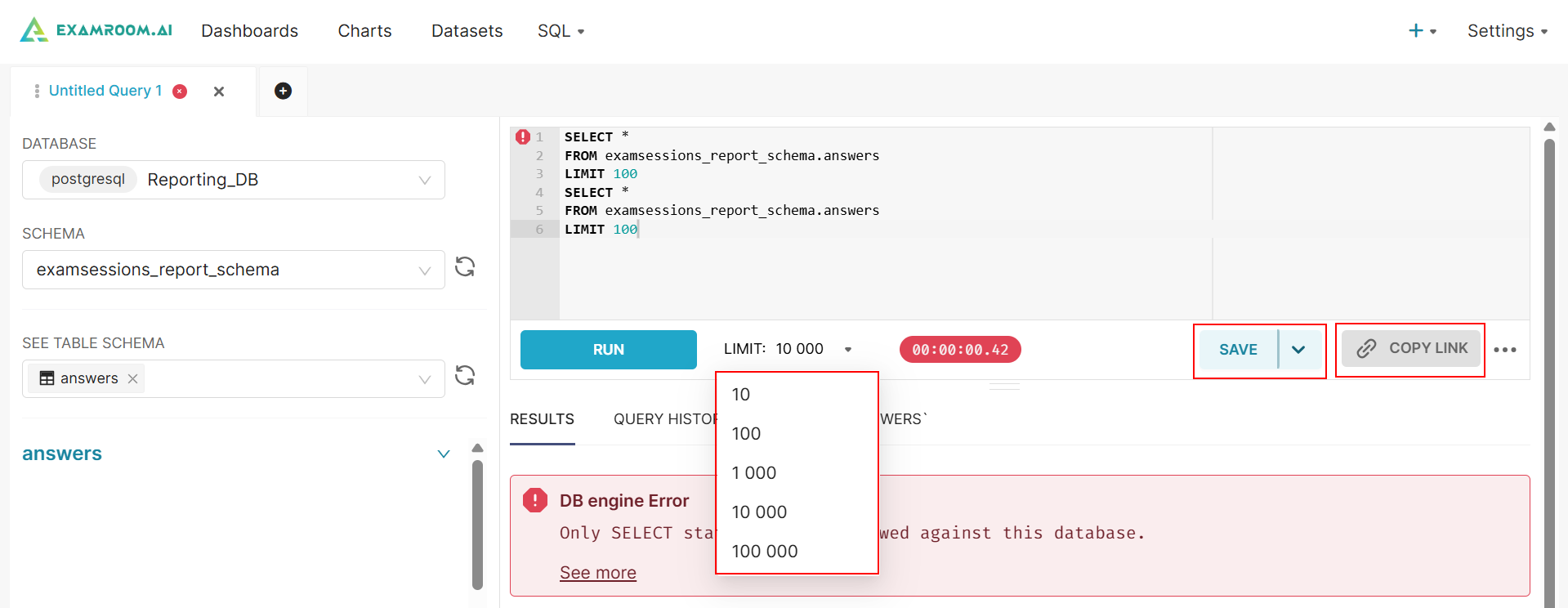
- Click Run to run the query.
- Set the query limit if required to control the maximum number of records returned by the query, ensuring better performance and resource management.
- Click Save and view the query in the saved query list. For more information, refer to Section 3.2 Saved Query.
- Click Copy Link to copy the query link.
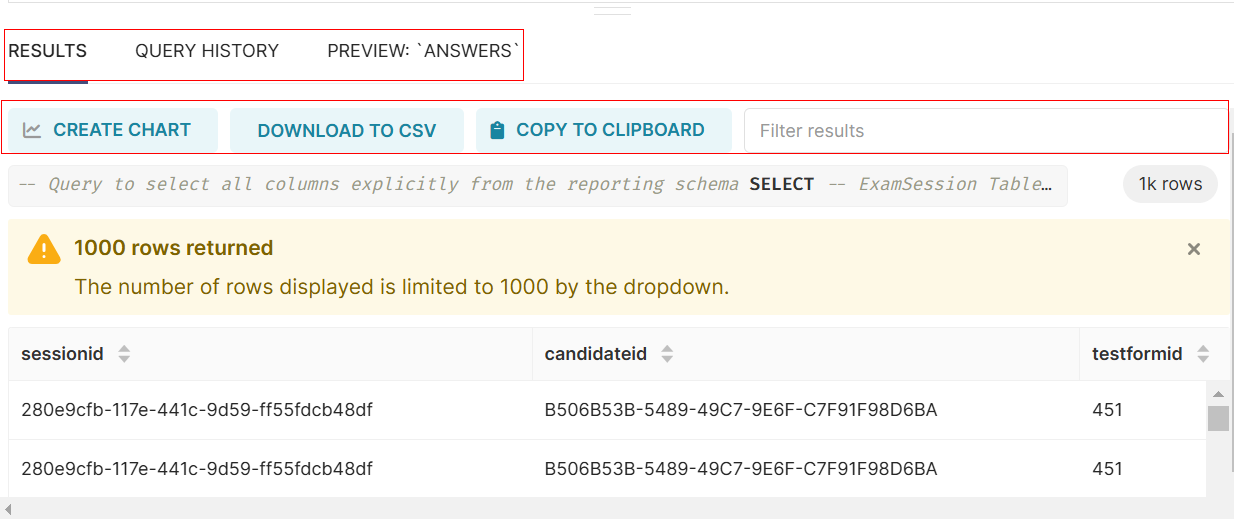
Note: After running the query, you can view the results, query history, and a preview of the executed query. - For refined analysis, click Results, Query History, Preview, and Create Chart tabs.
- RESULT: View the results of the executed query.
- CREATE CHART: Add a chart based on the executed query results.
- DOWNLOAD TO CSV: Download the query results in CSV format.
- COPY TO CLIPBOARD: Copy the query results to your clipboard.
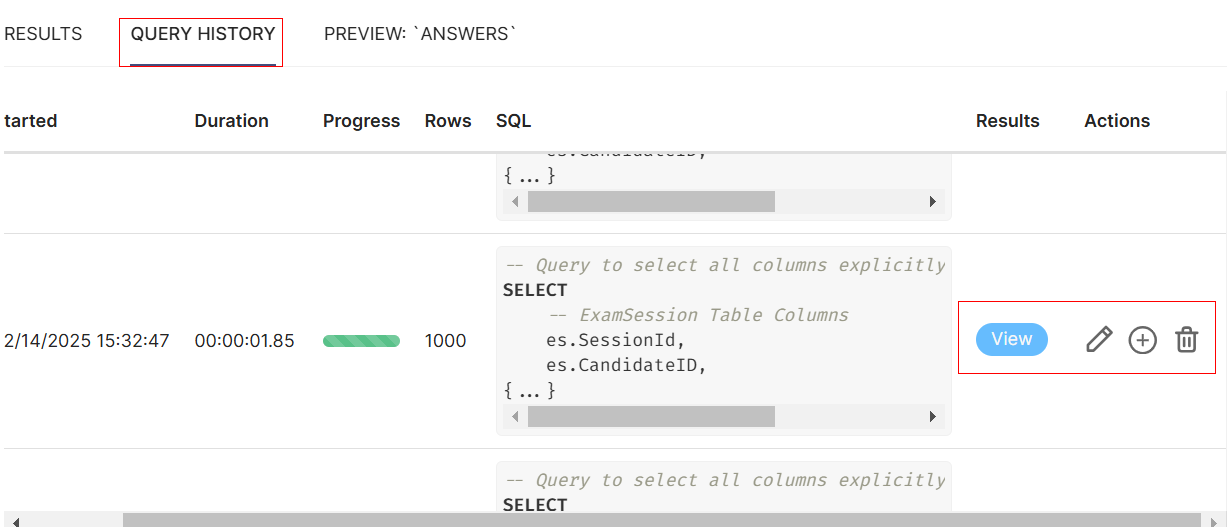
- Click QUERY HISTORY to view the query history including State, Started, Duration, Progress, Rows, SQL, Results, and Actions.
- State: The status of the query.
- Started: The timestamp indicating when the query execution began.
- Duration: The amount of time taken to execute the query.
- Progress: The completion percentage showing how much of the query has been processed.
- Rows: The number of rows returned by the query.
- SQL: The SQL query that was executed.
- Results: A preview of the query’s output or the number of records retrieved by clicking on the
icon.
- Actions: Available options to interact with the query, such as
overwrite text,
run query in new tab, or
deleting the query.
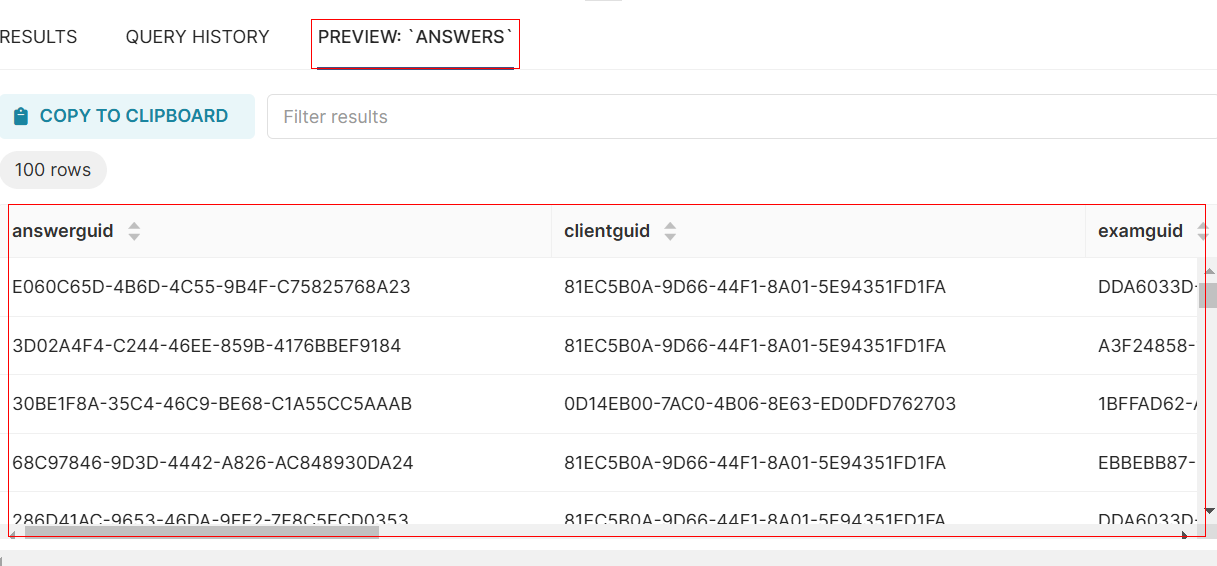
- Click PREVIEW to view the result answers.